
CLARITY IS THE PRODUCTThinking on narrative, video,
and what comes first.
Writing on why the story always comes before the screen, and what happens when organizations get that order right.
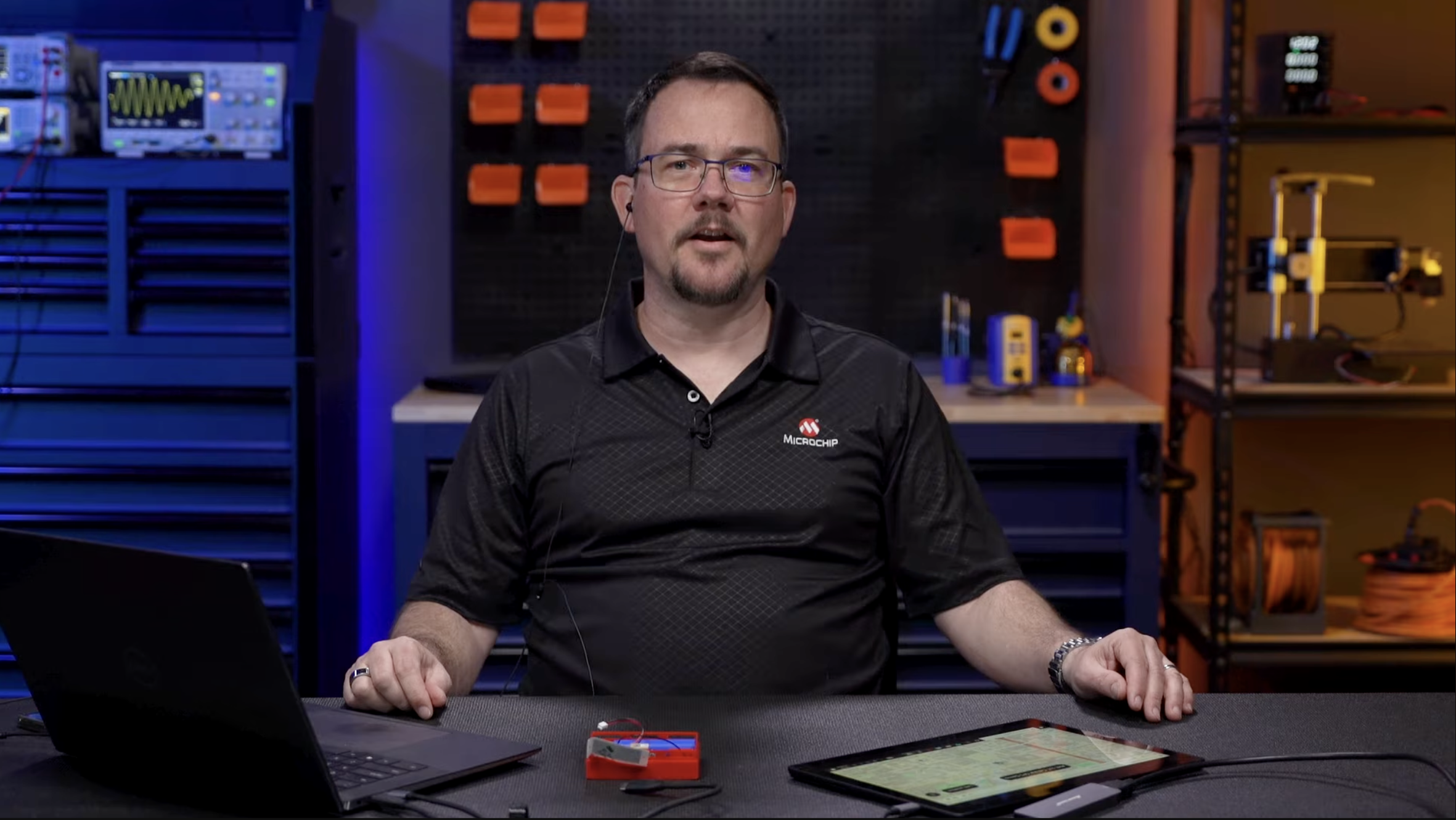
The Container Communicates Before the Content Begins
Before we built the Welcome to the Lab studio at Microchip Technology, I watched a collaboration video between Make Art Now and Gerald Undone.
Both are YouTube creators who work at the intersection of technology, craft, and visual storytelling. The video moved between their studios, showing the spaces where they work and the environments they have built around the act of making things. I wasn't watching as a viewer but as a producer, trying to understand why certain content environments make you trust the person speaking before they have said a single word worth trusting.
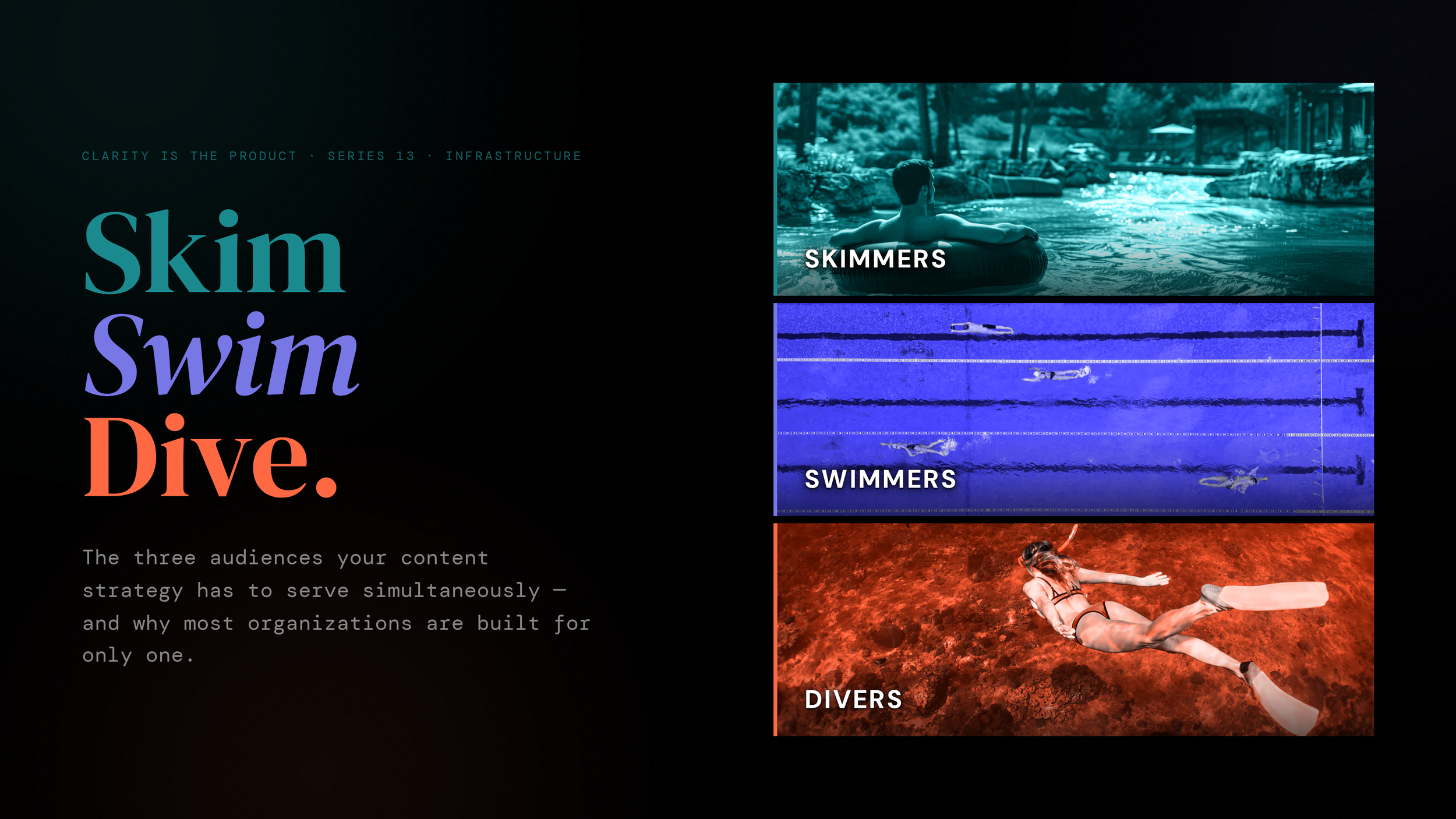
Skimmers. Swimmers. Divers. The Three Audiences Your Content Strategy Has to Serve Simultaneously
The first thing I did when I arrived at Microchip Technology was sit down with the YouTube analytics for two channels, a main marketing channel and a developer-help channel, and try to understand what we had actually built.
I wanted to know what types of videos we made, why we made them, which ones worked, and whether any clear pattern explained the difference. What I found had nothing to do with quality, talent, or budget.
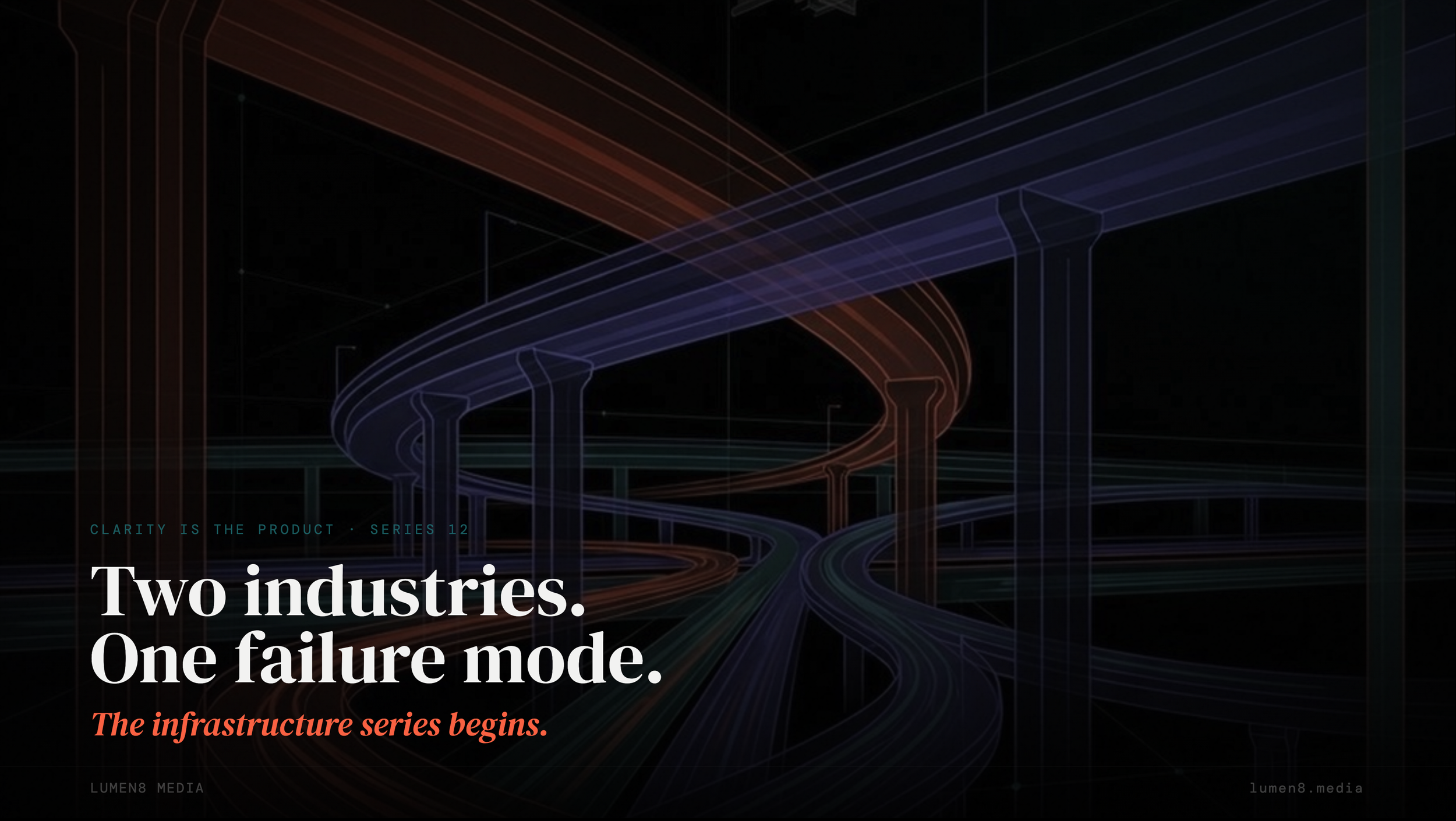
What the Tech Industry and Higher Education Have Both Been Building Toward, And Why the Answer Is the Same
There is a software development tutorial somewhere on YouTube, made by an engineer on the Bangalore team, that I cannot get out of my head.
The engineer knew the material cold. The content was exactly what a developer needed at a specific moment in a product integration. The problem was the audio. The room was wrong, the microphone was wrong, and at several critical moments in the tutorial, the moments where the viewer most needed to follow along, what was being said was simply too hard to parse. Not because the engineer's English wasn't functional. Because the cognitive load of decoding the audio left nothing for the brain to do with the information it was trying to receive. (Cognitive Load Theory, John Sweller, 1988 — established that extraneous cognitive load imposed by poor presentation degrades learning outcomes regardless of content quality.)
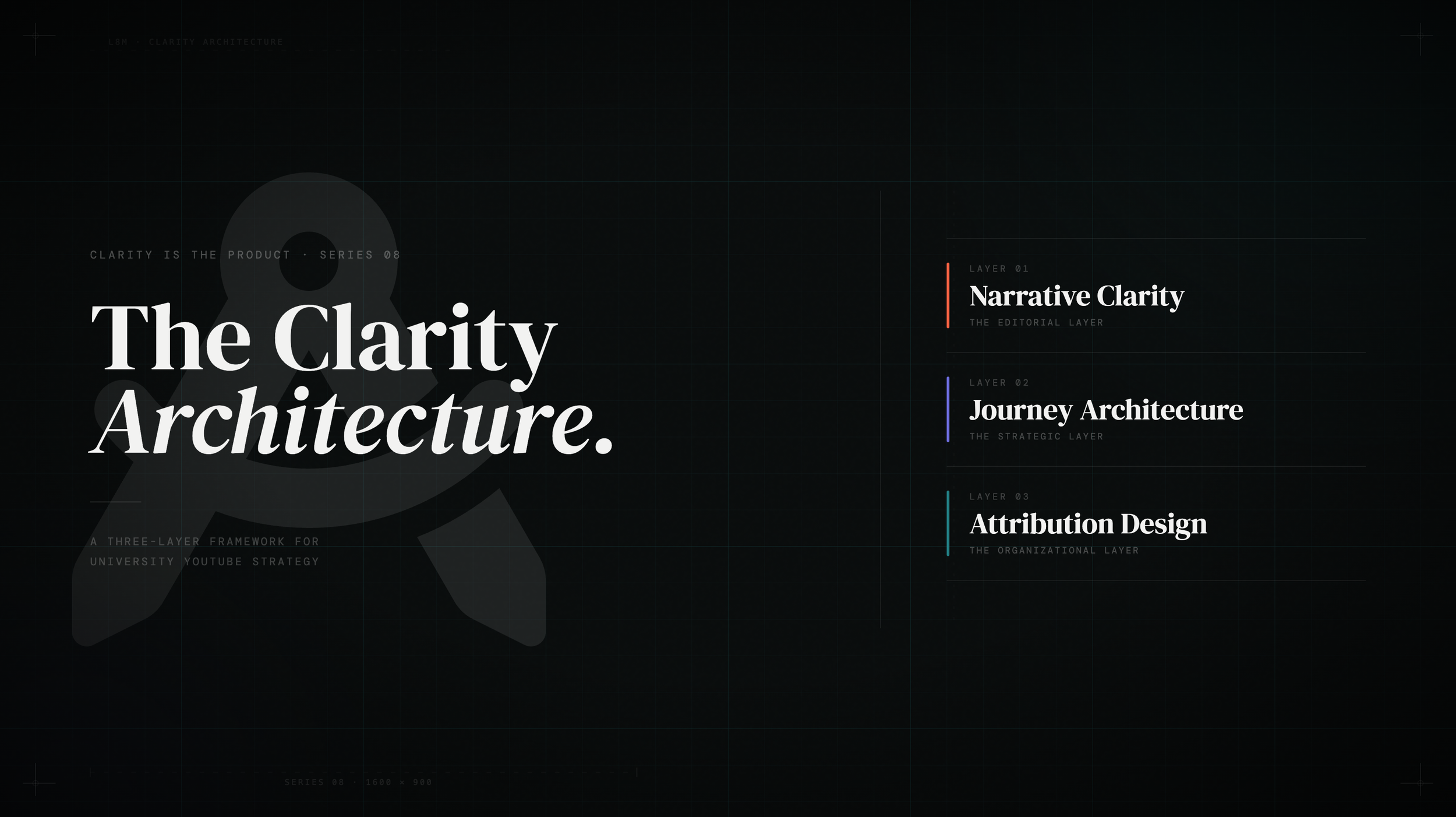
The Clarity Architecture: How Higher Education Marketing Leaders Build a YouTube Strategy That Compounds
This series started with a question about why university YouTube channels can't prove they work.
It went through the science of how educational content builds trust versus institutional content destroys it. Through the psychology of the student decision journey and why broadcast channels fail the students who need them most. Through the organizational structure that makes attribution impossible, even when the will to measure exists. Through ASU, which built the most sophisticated YouTube enrollment model in higher education and still can't trace a YouTube viewer to an enrolled degree student.
Each post named a part of the problem. This one is the answer.
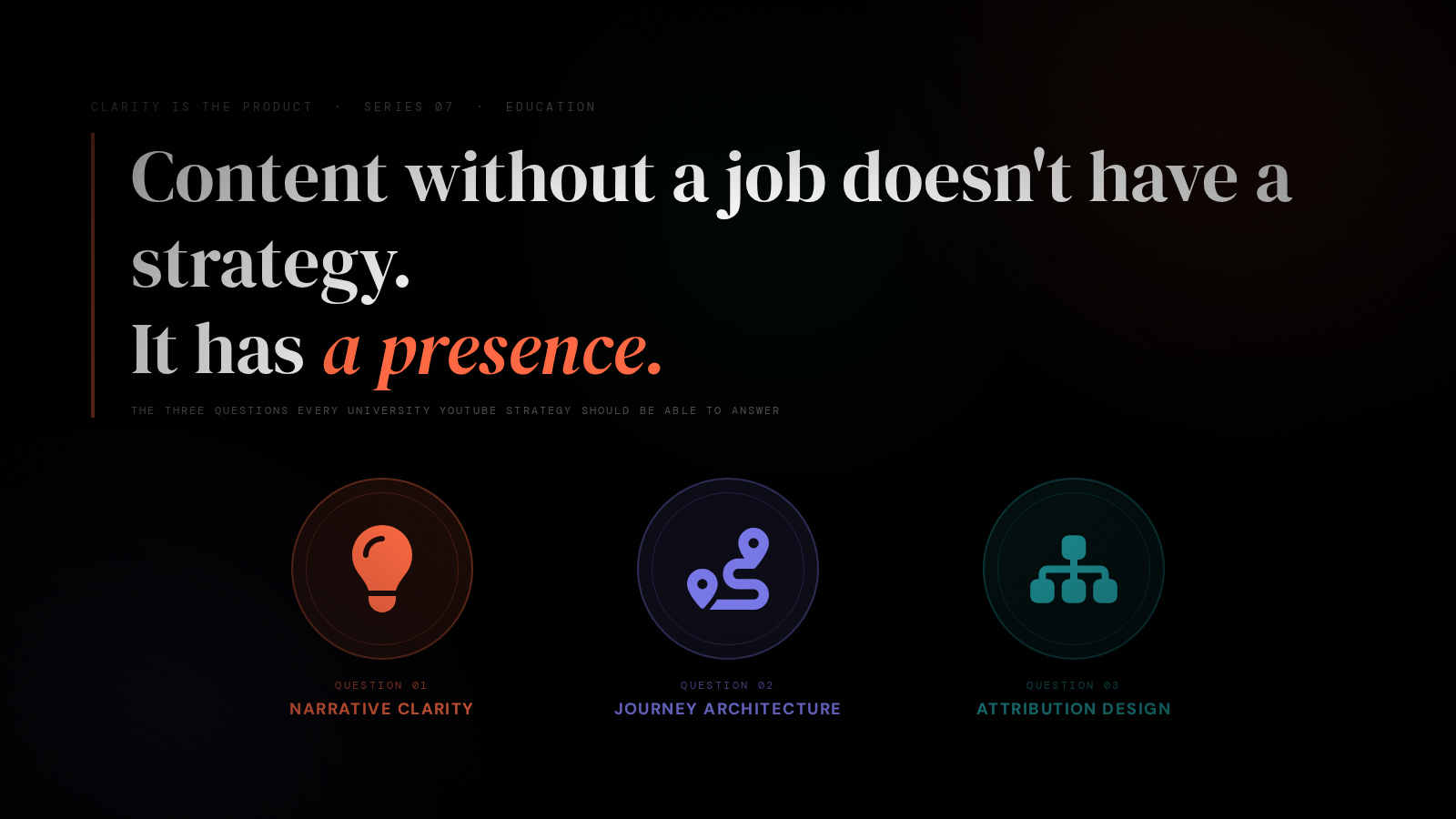
The Three Questions Every University YouTube Strategy Should Be Able to Answer
Every strategic planning cycle, university marketing teams produce some version of a content audit. Views, watch time, subscriber counts, maybe a sentiment analysis. The numbers go into a slide deck. Someone in the room asks whether the channel is contributing to enrollment. The answer is usually a variation of "we believe it is" delivered with enough confidence to move past the question.
That answer is not a strategy. It's institutional inertia dressed as one.
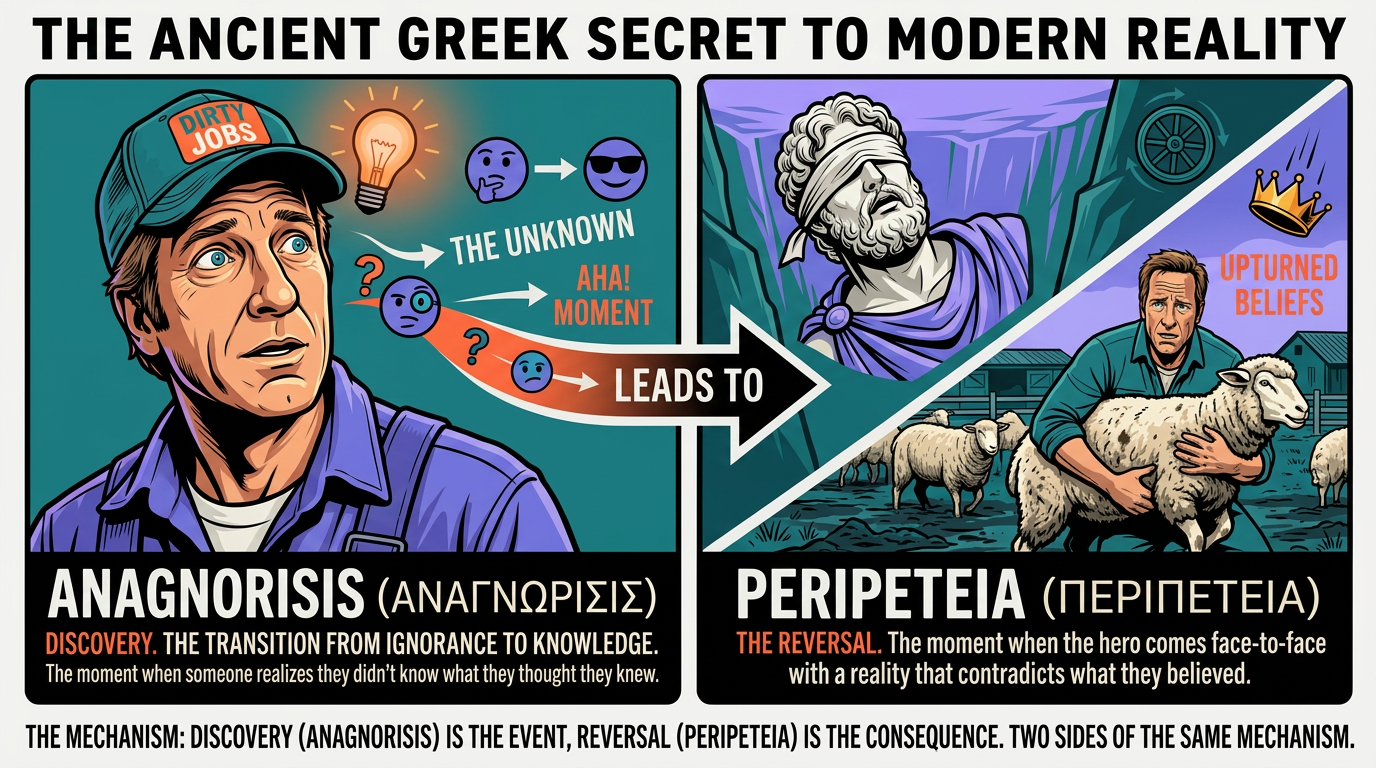
I Was Wrong. Aristotle Called It Peripeteia.
In 2009, I was at the first TEDx Phoenix.
I was working at the University of Phoenix at the time, deep in research into which types of media actually facilitate understanding, particularly in distance and online learning. I had already started to develop an intuition about how learning works: that something about failure, about being wrong first, seemed to be the engine of real comprehension. I just didn't have the language for it yet.
During the event, they showed Mike Rowe's TED talk in its entirety. The one about dirty jobs. The one with the sheep.
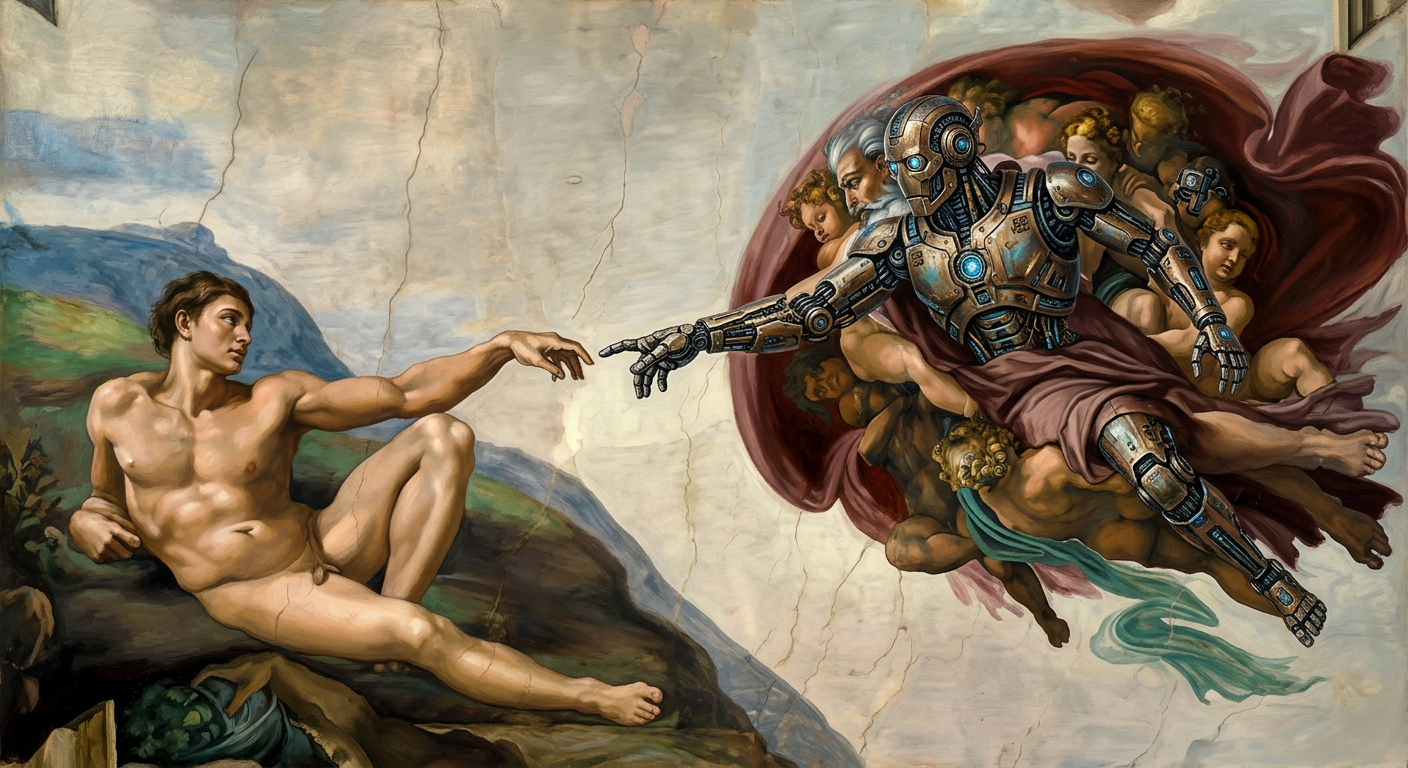
Confident, Wrong, Unaware: Why AI Can Produce Errors But Cannot Experience Being Wrong
In 2023, 60% of consumers said they preferred AI-generated creator content to traditional creator content. By January 2026, that number had collapsed to 26%.[1] More than 20% of videos surfaced to new YouTube users now qualify as what critics have taken to calling "AI slop."[2] Americans believe only 41% of online content is accurate, factual, and made by humans. Three-quarters say their trust in the internet is at an all-time low.[3]
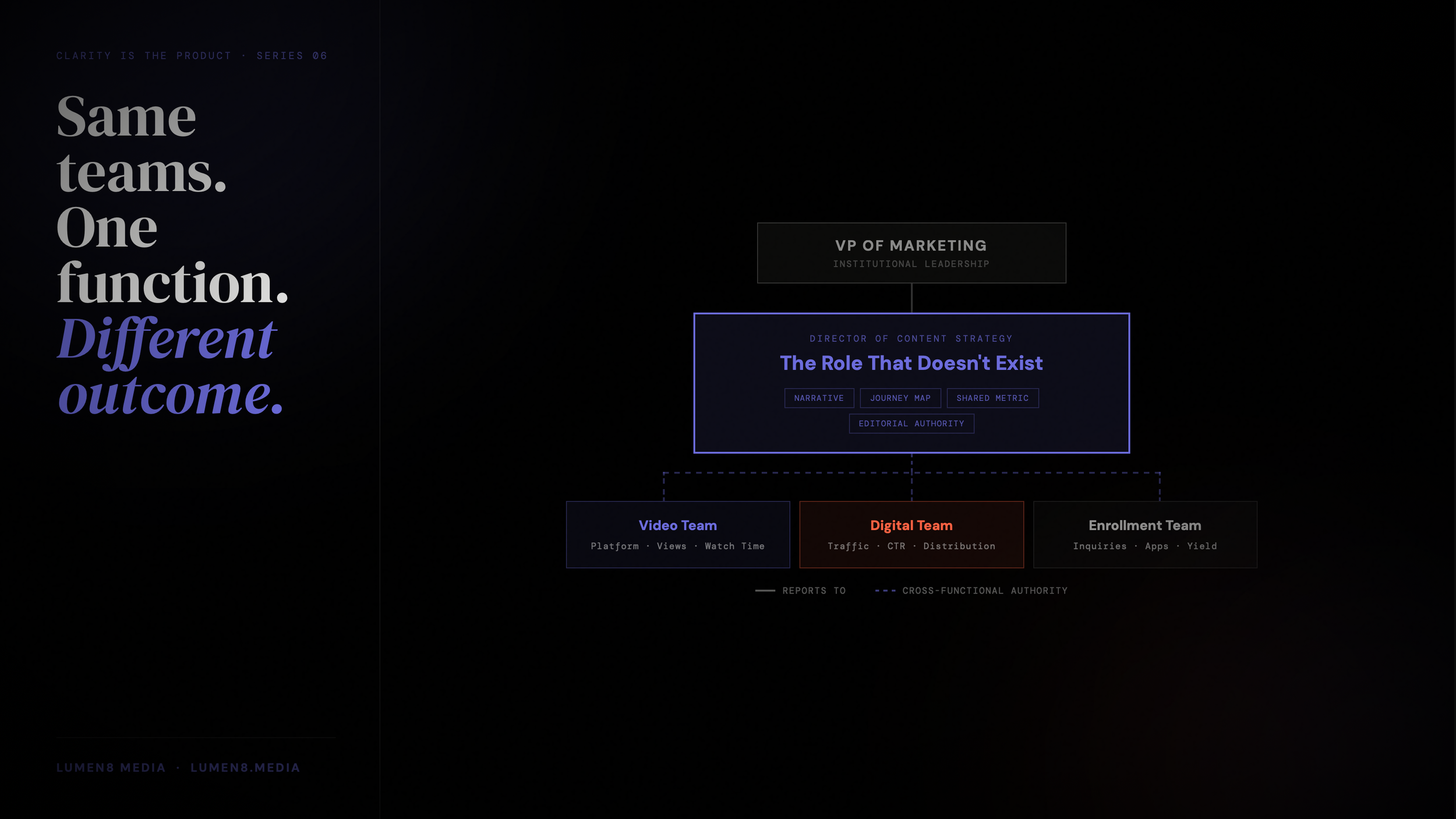
The Role That Doesn't Exist at Most Universities
There is a conversation happening in university marketing departments across the country that goes roughly like this:
The VP of Marketing presents the YouTube analytics to the enrollment leadership team. Views are up. Watch time is trending in the right direction. The brand awareness study shows familiarity scores improving among the target demographic. Someone asks: "Can we show how this connects to applications?" The VP says they're working on the attribution model. The conversation moves on. The channel keeps producing content. The question doesn't get answered.

The Seat Is Empty: What Mark Rober's 72 Million Subscribers Reveal About B2B Content's Biggest Gap
There is a former NASA engineer who spent nine years working on the Mars Curiosity Rover. He now has 72 million YouTube subscribers. Ask a classroom of fifth graders who he is, and you get an instant, excited answer. Ask a room full of engineers, and you get a respectful nod.
His name is Mark Rober. And he has cracked the code on making complex technical ideas land at scale — using the exact framework this series has been building toward.
He is also talking to fifth graders.
ASU Got Closer to Solving University YouTube Than Anyone. The Gap Is Still Open.
If you've been following this series, you already know the gap exists.
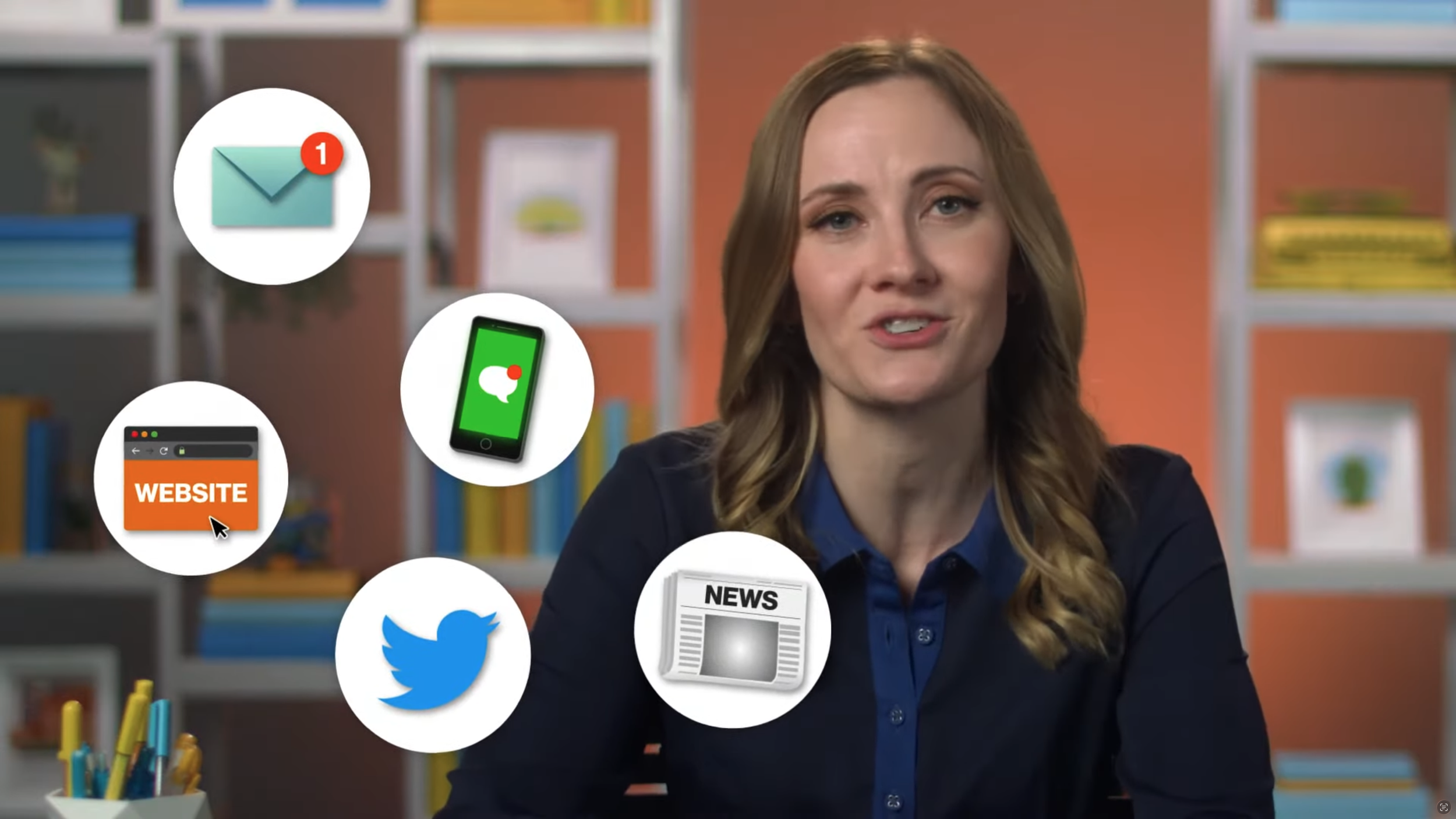
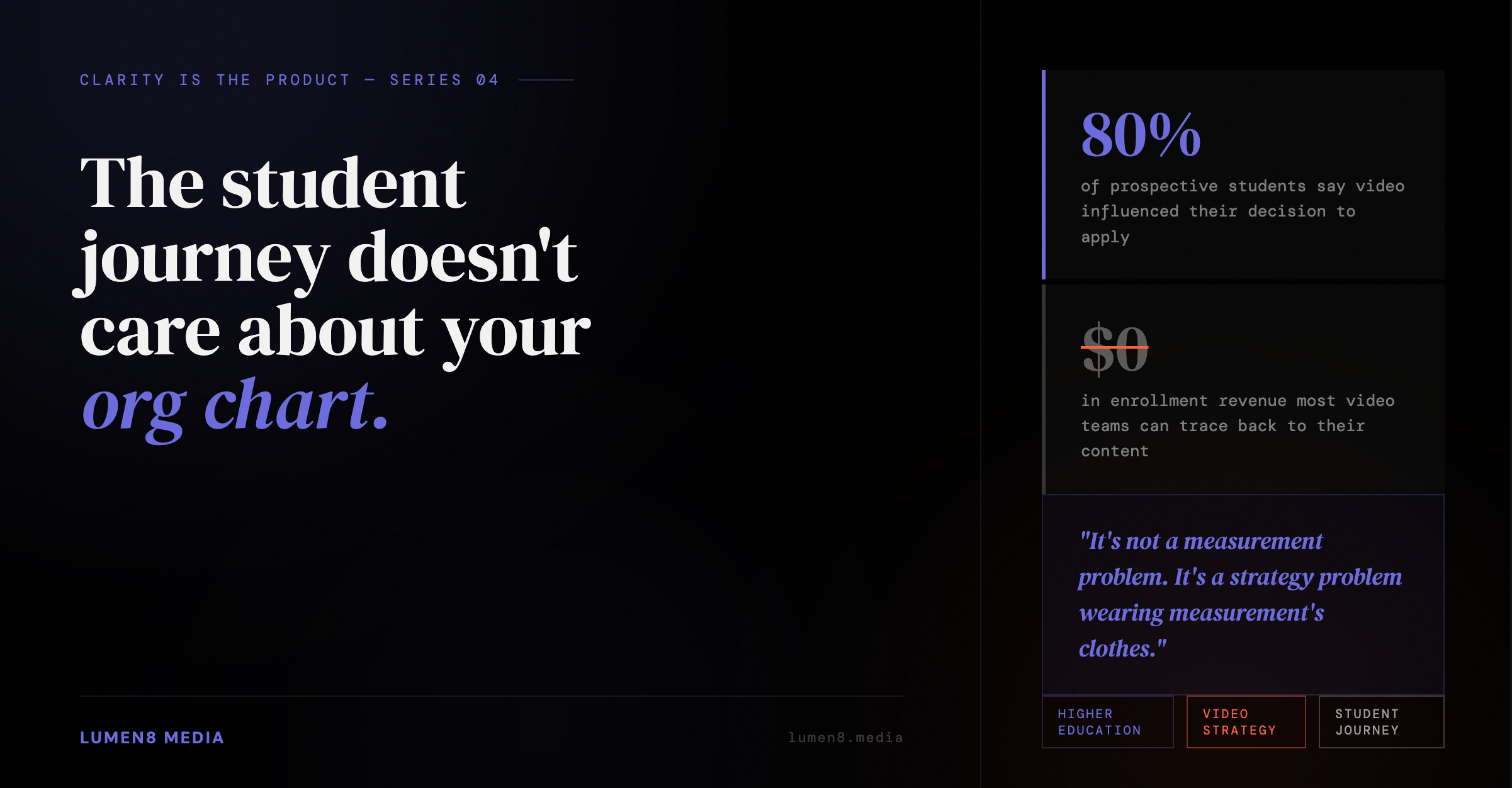
You know that 80% of prospective students say video directly influenced their application decision,1 and that most university YouTube channels can't trace a single enrolled student back to their content. You know the problem isn't production quality, posting frequency, or platform strategy. The problem is structural: video teams optimize for views, digital teams optimize for traffic, enrollment teams optimize for applications, and nobody owns the line connecting all three to the student who just watched your campus tour and then disappeared.
Your University's YouTube Channel Is Working. You Just Can't Prove It. Here's How to Fix That.
There's a conversation happening in higher education marketing departments right now, usually around budget season, that goes something like this:
"We have 12,000 subscribers and our campus tour video has 80,000 views. Is that good?"
Nobody in the room knows how to answer. So they move on.
This is the second failure of university video strategy — and in some ways it's more damaging than the first. Bad content can be fixed.

Most University YouTube Channels Are Expensive Brochures. Here's What the Ones That Work Have in Common.
Higher education spends billions on brand. And yet, most university YouTube channels could be swapped with any other institution's and nobody would notice.
Same campus b-roll. Same convocation footage. Same smiling students walking across a quad that somehow looks identical in Arizona, Ohio, and Maine.
This isn't a production problem. It's a strategic one. And understanding the difference is what separates the channels quietly compounding millions of views from the ones that peaked at a ribbon-cutting video in 2019.
The Valley Is the Feature: The Neuroscience of Teaching Through Failure
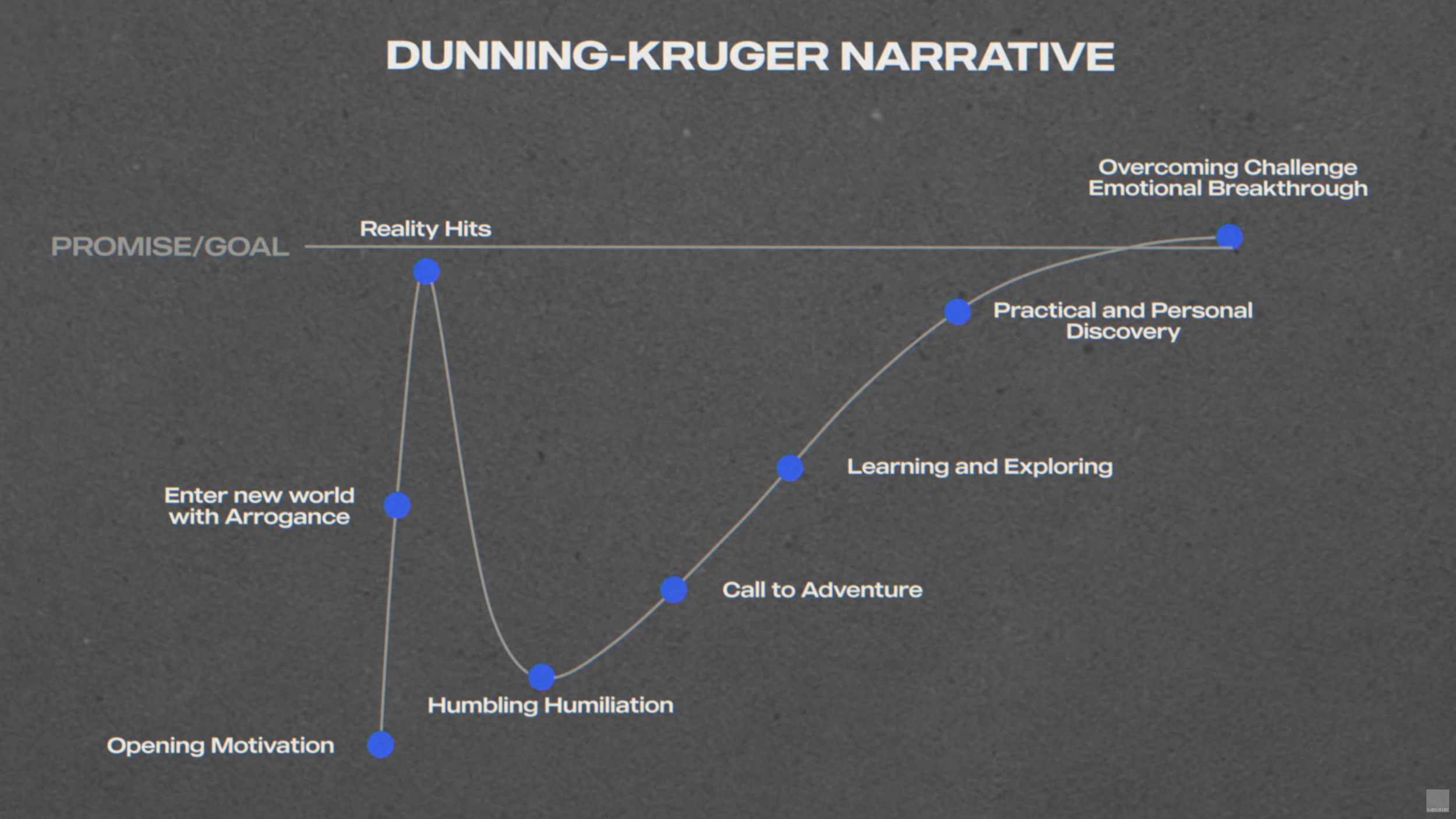
There's a moment every experienced engineer, developer, or technical practitioner knows intimately. It's the moment they realized they had no idea what they were doing — after being completely certain they did.
Maybe it was the first time a production deployment broke in ways they hadn't anticipated. Maybe it was six months into learning a new framework when the elegant simplicity they admired at the start revealed itself to be a carefully hidden complexity. The feeling is universal: a quiet collapse of confidence followed, eventually, by something harder and more durable.
That moment is not a liability in your educational content. It is the most powerful entry point you have.
The Mystery Machine: How Educational Documentary Content is Redefining Learning on YouTube
Something unusual is happening on YouTube.
Between the product reviews and entertainment channels, a different category of content has quietly built massive audiences: educational documentaries that use mystery as their primary teaching mechanism.
Veritasium has 20 million subscribers. LEMMiNO has 5.8 million. These aren't cooking tutorials or productivity hacks. They're hour-long investigations into the Dyatlov Pass incident, the physics of falling slinkies, and unsolved mathematical puzzles.
And people are watching—not because they're being persuaded, but because they're curious.
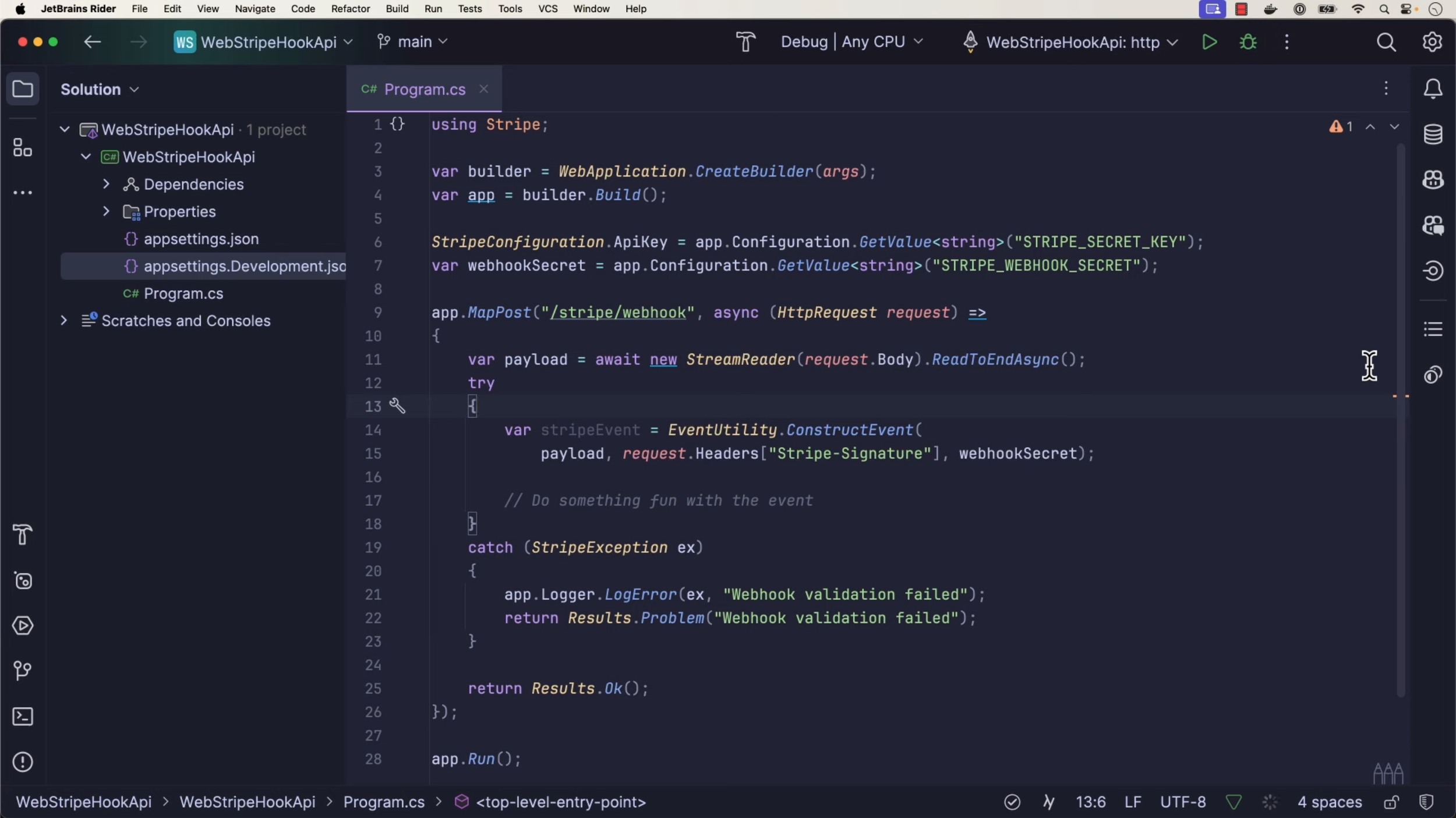
Building Understanding at Scale: How Leading Tech Companies Turn Education Into Competitive Infrastructure
When Stripe's developer education team launched their YouTube channel during the pandemic, they weren't creating marketing content. They were building infrastructure.
The result? Millions of developer reach annually, with a direct, attributable rise in product adoption tied to video engagement.
This isn't about viral videos or view counts. This is about understanding what the world's most successful developer platforms already know: education isn't a support function—it's the engine that drives adoption at scale.

Clarity Is the Product: Why Video Isn't a Marketing Channel—It's an Educational Engine
Most companies treat video as a marketing channel.
They produce launch videos, feature demos, customer testimonials—content designed to persuade, not educate. When adoption stalls, they make more videos. More polished production. More calls-to-action.
But adoption rarely fails because customers aren't convinced. It fails because customers aren't clear.