
Building Understanding at Scale: How Leading Tech Companies Turn Education Into Competitive Infrastructure
Clarity Is the Product — Foundations
When Stripe's developer education team launched their YouTube channel during the pandemic, they weren't creating marketing content. They were building infrastructure.
The result? Millions of developer reach annually, with a direct, attributable rise in product adoption tied to video engagement.
This isn't about viral videos or view counts. This is about understanding what the world's most successful developer platforms already know: education isn't a support function, it's the engine that drives adoption at scale.
The Infrastructure Mindset
Think of educational video content like roads, not billboards.
Billboards interrupt. Roads enable. Billboards persuade. Roads remove friction.
When MongoDB reports reaching one million learners monthly through MongoDB University, they're not bragging about content marketing ROI. They're describing the infrastructure that powers their 37,000+ customer base and 1.5 million course registrations.
The difference is fundamental. Marketing creates awareness. Education creates capability. And in developer adoption, capability is what converts.
What Success Actually Looks Like
The companies that have cracked this understand something critical: you can measure the impact of education the same way you measure any infrastructure investment.
Stripe's metrics:
Millions of developers reached annually
25%+ of traffic from YouTube recommendations
Direct correlation between video engagement and product adoption
Hundreds of developer questions answered weekly through live streams
Twilio's results:
Technical content traffic doubled or tripled after video implementation
Monthly readership increased 10x on some articles
Cost per engaged reader comparable to organic search traffic
Traffic quality matches organic: same time on site, same page depth
MongoDB's scale:
1 million+ monthly learners across their platform
50,000 developers taking free courses per month
600+ new certified professionals monthly
Three "North Star" metrics: Quality, Engagement, Certification
These aren't vanity metrics. These are infrastructure performance indicators.
The Three-Layer Architecture
Every successful educational video program follows the same basic structure:
Layer 1: Discovery (3-5 Minutes)
Short, focused videos that answer "What can this do?"
Purpose: Reduce time-to-understanding
Format: Product overviews, use case demonstrations
Goal: Get developers to "I should try this"
Stripe's 5-minute demo format has become their hallmark. Short enough to watch between meetings. Substantial enough to understand value.
Layer 2: Activation (5-12 Minutes)
Step-by-step tutorials that answer "How do I actually build this?"
Purpose: Reduce time-to-first-success
Format: Code walkthroughs, API integration guides
Goal: Get developers to "It works"
MongoDB structures this as 5-minute video lectures combined with hands-on labs. Video provides context. Labs provide practice. Together, they create understanding.
Layer 3: Mastery (10-20 Minutes)
Deep dives that answer "How do I use this in production?"
Purpose: Reduce time-to-production-ready
Format: Architecture patterns, best practices, advanced features
Goal: Get developers to "I trust this"
Twilio's full "Tutorials" platform exemplifies this layer. Each tutorial is a complete, production-ready application. Not toy examples. Real code developers can ship.
The Numbers That Matter
When you treat education as infrastructure, you track infrastructure metrics.
Time-to-first-success is the primary measure. Companies implementing comprehensive video education report:
68% reduction in time-to-first-success (5 days → 1.6 days)
35% higher trial-to-paid conversion rates
42% faster feature adoption vs. documentation alone
One developer platform increased active developers by 138% while simultaneously cutting time-to-first-success from 4 days to 1.2 days. The education infrastructure removed friction at every step.
Adoption cohort tracking reveals usage patterns:
Power users (heavy, consistent usage)
Casual users (regular but lighter engagement)
Idle users (account created, minimal activity)
New users (recently onboarded)
This isn't marketing segmentation. This is infrastructure load analysis.
Certification as a proxy metric measures understanding depth:
MongoDB: 600+ monthly certifications
Stripe: Formal certification programs for partners
Twilio: Integration with broader developer education ecosystem
Certifications create advocates. Advocates drive adoption within organizations. The cycle compounds.
Why Video Specifically
Here's where cognitive science and business strategy align.
Video leverages dual coding theory: verbal and visual channels processing simultaneously. This isn't just faster learning—it's deeper encoding. Information processed through multiple channels creates more retrieval pathways.
For complex technical concepts, this matters enormously.
A developer watching a MongoDB aggregation pipeline video sees:
The syntax (visual)
The explanation (verbal)
The data transformation (visual)
The reasoning (verbal)
All simultaneously. All reinforcing each other.
Research confirms: well-designed educational videos improve knowledge retention by 33%, comprehension by 28%, and transfer ability by 43% compared to passive consumption.
But here's what the research doesn't capture: video is an asynchronous infrastructure.
Create once, serve infinitely. A single well-produced tutorial can onboard thousands of developers. Each viewing costs nothing. Each success compounds.
Stripe's developer videos reach millions annually with a relatively small team. That's infrastructure leverage.
The Build vs. Buy Reality
"Should we build educational video infrastructure or focus on better docs?"
Wrong question.
The right question: "What's the cost of developers failing to adopt our product?"
Every developer who:
Downloads your SDK and gives up
Starts integration and gets stuck
Reaches for a competitor because they 'get it' faster
...represents sunk acquisition cost with zero return.
Educational video infrastructure addresses this at scale.
Twilio's philosophy captures it perfectly: "Docs are like air. It's impossible for a developer to be successful without them."
Video isn't replacing documentation. Video is removing the gap between reading documentation and successfully implementing it.
The Team Structure That Works
Every successful program has dedicated educational infrastructure teams:
Stripe:
Director of Developer Education
Developer Advocates (tripled global team)
Content engineers focused on educational effectiveness
MongoDB:
VP of Education, Documentation & Academia
Curriculum engineers teaching courses
Four-part structure: University, Docs, Academia, Community
Twilio:
Director of Developer Education
Developer Evangelists at scale
21 developers contributed to the tutorial platform over 18 months
Notice the pattern? These aren't marketing hires. These are engineering educators with production experience.
You need people who can:
Write production-quality code
Explain complex concepts clearly
Understand learning psychology
Measure and iterate based on data
That's a rare combination. Which is why successful companies build teams, not hire individuals.
The Production Standards Nobody Talks About
Here's what matters for educational video:
Audio quality: Critical. Developers will tolerate mediocre visuals but not bad audio.
Code visibility: High contrast, large text, clean screen recording.
Conversational tone: Stripe explicitly avoids a "webinar-style presentation" in favor of "talking with developers at a local meetup."
Practical examples: Real code that actually works, not pseudocode or toy examples.
Appropriate length: Research shows that 9-12 minutes maintains the highest engagement. Shorter for concepts. Longer for complex implementations.
Here's what doesn't matter:
Professional studios
Fancy animations
Expensive production equipment
Celebrity hosts
MongoDB's 5-minute lectures work because they're clear and focused. Not because they're beautifully produced.
The infrastructure that matters is educational design, not production budget.
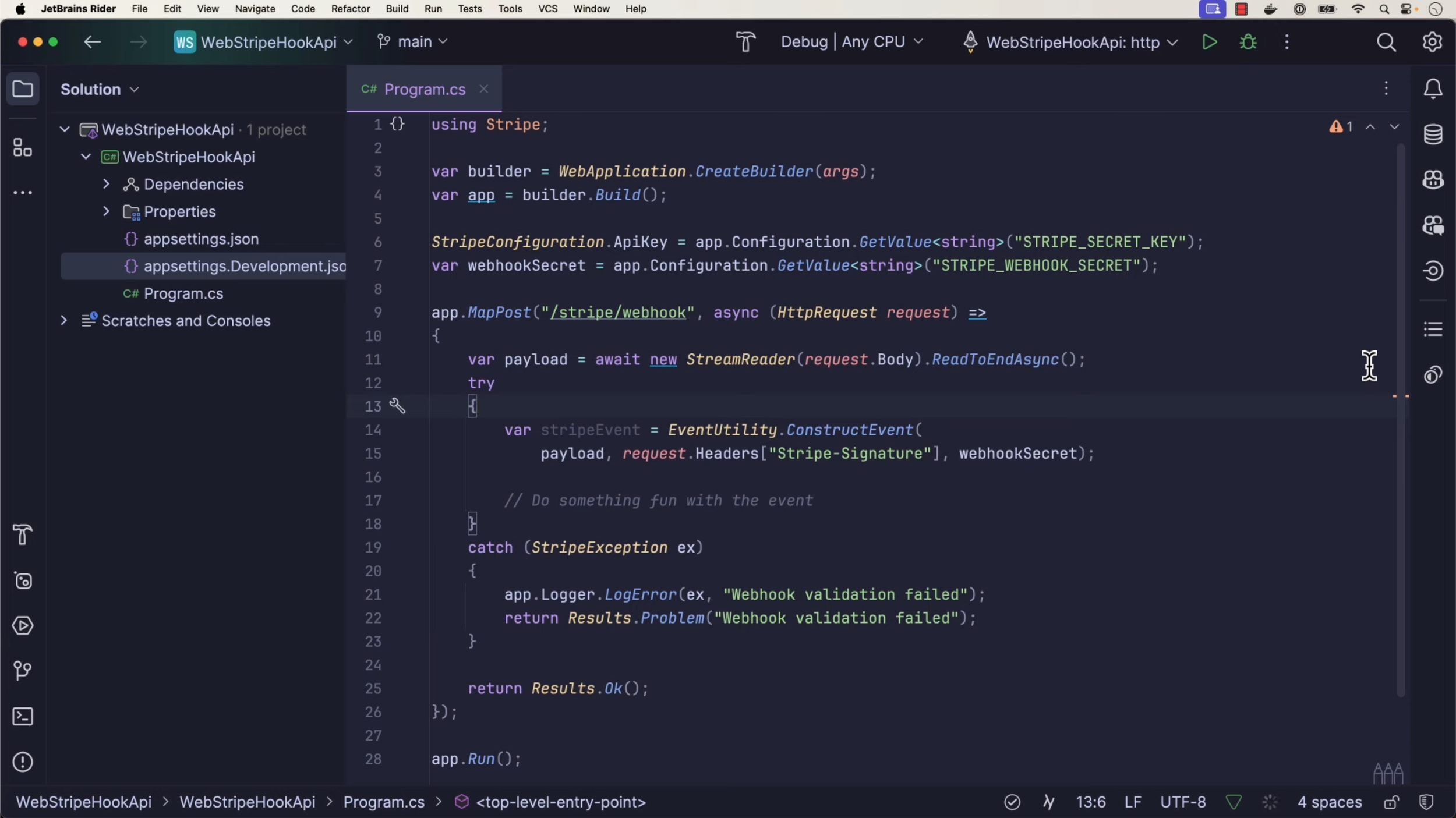
Code visibility: High contrast, large text, clean screen recording.
The Feedback Loop That Compounds
Successful educational infrastructure creates a virtuous cycle:
Developer watches video → Understanding increases
Developer succeeds faster → Adoption increases
Developer shares success → Community growth
Community creates content → Infrastructure scales
More developers watch → Loop repeats
User-generated content converts 3x better than company-created content. Why? Because peer tutorials address real pain points with authentic workflows.
When community members create video content, you're not just scaling content production. You're scaling understanding itself.
MongoDB's 1.5 million course registrations didn't come from 1.5 million marketing campaigns. They came from developers teaching other developers, compounding over time.
The Cost of Not Building This
Every company in this analysis invested significantly in educational infrastructure. Not because they had extra budget. Because they understood the cost of not investing.
What poor educational infrastructure costs:
Extended sales cycles (developers need proof of capability)
Higher support burden (same questions repeatedly)
Lower feature adoption (features exist but aren't used)
Slower word-of-mouth growth (developers don't recommend what they don't understand)
Increased churn (frustrated users leave before finding value)
These costs are often invisible because they're distributed. But they compound.
What good educational infrastructure delivers:
Faster time-to-value (developers succeed in hours, not weeks)
Reduced support load (one video answers thousands of questions)
Higher feature adoption (education infrastructure guides discovery)
Accelerated word-of-mouth (developers recommend what they master)
Improved retention (understanding creates investment)
The companies that win aren't those with the best technology. They're the ones that make their technology easiest to understand and adopt.
Getting Started: The Practical Path
You don't need to build MongoDB University on day one. You need to start removing friction.
Week 1: Identify the biggest bottleneck
Where do developers get stuck most often?
What question appears repeatedly in support?
What feature has low adoption despite high value?
Start there.
Week 2: Create one video addressing that bottleneck
5-10 minutes maximum
Step-by-step walkthrough
Real code, real implementation
Clear audio, visible code
Week 3: Measure impact
Track views
Monitor support ticket reduction
Survey developers who watched
Measure time-to-success change
Week 4: Iterate or scale
If it worked: create more
If it didn't: understand why and adjust
Either way: you're building infrastructure, not content
The Strategic Implication
Educational video infrastructure isn't a developer relations nice-to-have. It's a competitive moat.
When Stripe, Twilio, MongoDB, and AWS invest millions in educational infrastructure, they're not being generous. They're being strategic.
They're building systems that:
Reduce friction at every adoption stage
Scale understanding without scaling headcount
Create network effects through community education
Compound advantage over time
The companies that understand education as infrastructure move faster, scale better, and win more often.
Not because they have better products. Because they make their products easier to adopt.
And in a world where 70% of software features go unused, adoption is everything.
The bottom line: Education infrastructure doesn't support your product. It is your product. The faster developers understand and adopt, the faster you win.
Start building.
The Evidence: How Industry Leaders Execute
The following deep dives show exactly how Stripe, Twilio, MongoDB, and AWS have built their educational infrastructure—with specific metrics, team structures, and strategic approaches you can learn from.
Stripe: The Gold Standard for Developer Education
Video Strategy:
Launched dedicated developer-focused YouTube channel during pandemic (distinct from main brand account)
Weekly how-to videos covering API fundamentals, SDKs, and sample code
Emphasis on conversational, meetup-style presentation (avoiding webinar format)
Live streaming and YouTube Premiere with Q&A dialog
5-minute demo format as a hallmark of their Dev Education team
Measurable Results:
Reaching millions of developers annually with 25%+ of traffic from YouTube recommendations
Hundreds of questions live from developers on weekly basis
Tens of thousands of unique views monthly accounting for thousands of hours watched
Developers click through to docs on a weekly basis
"Attributable rise in new product adoption" directly tied to video content
Developer engagement "vastly exceeds measurable goals"
Strategic Approach:
Dedicated developer education team (Director: Andrew Baker)
Comprehensive training platform (Stripe.training) with certifications
Multiple learning formats: API reference, quickstarts, tutorials, interactive training (Twilio Quest-style)
Code-forward demos that tell stories through actual projects
Tripled Dev Advocacy team size across global regions
Key Quote: "Beyond improved metrics, the increase in developer activity leads to an attributable rise in new product adoption. The more product launches we can support through developer livestreams and office hours, the more central our work is to the core business."
Twilio: The Developer-First Pioneer
Video Strategy:
"Liftoff and Learn" video tutorial series for core products (Voice, SMS, etc.)
Video lectures taught by Developer Evangelists
Developer Hub with prebuilt tutorials for common use cases
YouTube playlists organized by product and use case
Focus on showing domain expertise and developer empathy through code demos
Measurable Results:
Traffic to technical content doubled or tripled after video campaigns
Monthly readership increased by a factor of ten in some cases
Traffic from Stack Overflow video placements equals organic engagement
Visitors spend as much time on site and visit as many pages as organic searchers
"Very affordable" cost per reader compared to other distribution channels
Educational Infrastructure:
Full "Tutorials" platform for production-ready applications
Code-forward, IDE-like documentation experience
Each tutorial is a complete application developers can use as starting point
Interactive file explorer with guided tours through code
21 developers contributed over 18 months to tutorial development
Philosophy:
"Docs are like air. It's impossible for a developer to be successful without them" - Andrew Baker, Director of Developer Education
Five-star widget feedback system embedded in every docs page
Developer evangelists magnify already great developer experience
Scaled developer outreach using both employees and non-employees
MongoDB University: Education as Growth Infrastructure
Video Strategy:
Free online courses with 5-minute video lectures taught by curriculum engineers
300+ different assets including videos, labs, lessons, and certifications
Learning Bytes: short-form 20-minute content on new features
Language subtitles in 6 languages (Chinese, Korean, Spanish, French, Portuguese)
Partnered with LinkedIn Learning and Coursera for wider distribution
Measurable Results:
Over 1 million learners monthly across MongoDB University platforms
1.5 million+ registrations for MongoDB University courses total
300+ million database downloads
50,000+ developers taking free courses per month (after 2022 refresh)
600+ individuals becoming certified professionals monthly
37,000+ customers in over 100 countries
Educational Infrastructure:
Robust tech stack: Thought Industries (LMS), Meazure Learning (certification), Credly (badging), Caveon (assessments)
Four core areas: MongoDB University, Documentation, Academia, Community
Hands-on labs using in-browser development environment
Progress tracking and knowledge checks after each lesson
Free certifications for educators and students
North Star Metrics:
Quality: Consistently high-quality hands-on labs
Engagement: One million+ monthly learners
Certification: Increasing MongoDB credentials earned
Strategic Impact:
Education aligned directly with business objectives (product adoption, customer success)
Creates "virtuous cycle": skilled developers → increased product adoption → MongoDB growth
Reduced barrier to entry for new users
Network of certified professionals advocating for MongoDB within organizations
Positioned as industry leader through certification programs
AWS: Scale Through Educational Content
Video Strategy:
Extensive video tutorials and documentation
AWS Training and Certification programs
Developer-focused educational content across YouTube
Tutorial videos for specific services and use cases
Measurable Adoption Metrics:
Amazon Q Developer metrics show AI tool adoption patterns
Organizations track "percentage of engineers who adopted" across cohorts: Power, Casual, Idle, New
Daily active usage data and adoption trends tracked over time
Visualization of AI-written vs human-written code ratios
Tutorial completion metrics tied to product activation
Educational Approach:
Free tier access for hands-on learning
Certification programs validating skills
Extensive documentation with video walkthroughs
Community-driven content and support
Focus on reducing time-to-first-success
Common Success Patterns Across Companies
Investment in Developer Education Teams:
Stripe: Dedicated Director of Developer Education, tripled advocacy team
Twilio: Full Developer Education department, evangelists at every event
MongoDB: VP of Education, Documentation & Academia leading comprehensive program
AWS: Massive investment in training and certification infrastructure
Metrics-Driven Approach: All companies track:
Engagement: Views, watch time, completion rates
Adoption: Time-to-first-success, active users, feature usage
Business Impact: Certification rates, customer growth, revenue correlation
Quality: Feedback ratings, satisfaction scores, content effectiveness
Multi-Format Learning Paths:
Short videos (5-20 minutes) for quick learning
Longer tutorials for comprehensive topics
Hands-on labs and interactive environments
Certifications for credential validation
Written docs + video + interactive code
Community-Centric Philosophy:
Developer advocates as community connectors
User-generated content encouraged
Open feedback loops (ratings, comments, forums)
Regular office hours and live streams
Conference presence and local meetups
Production Quality vs. Authenticity Balance:
Conversational, meetup-style > polished webinar format
Code-first demonstrations over slides
Real developer workflows shown
Practical, production-ready examples
Authenticity valued over Hollywood production
Key Takeaways for Implementation
Start with measurement: Define success metrics before launching videos
Invest in people: Dedicated education teams drive sustainable programs
Create learning paths: Single videos → Courses → Certifications
Enable hands-on practice: Video + interactive labs = higher retention
Build feedback loops: Continuous improvement based on user data
Scale through community: User-generated content converts 3x better
Align with business goals: Education should directly drive adoption metrics
Make it free and frictionless: Reduce barriers to learning
Provide multiple formats: Meet developers where they are
Track the full funnel: Video view → Tutorial completion → Product adoption → Business outcome
References
Stripe:
Twilio:
https://www.twilio.com/en-us/blog/developers/liftoff-and-learn-twilio-voice
https://stackoverflowsolutions.com/topic/client-stories/case-study-twilio
https://medium.com/every-developer/how-twilio-became-the-twilio-of-sms-and-voice-1e8f215f9d0c
MongoDB:
https://appsembler.com/blog/mongodb-university-mongodb-training-machine/
https://www.mongodb.com/blog/post/introducing-next-generation-mongodb-education
AWS:
