
CLARITY IS THE PRODUCTThinking on narrative, video,
and what comes first.
Writing on why the story always comes before the screen, and what happens when organizations get that order right.
The Container Communicates Before the Content Begins
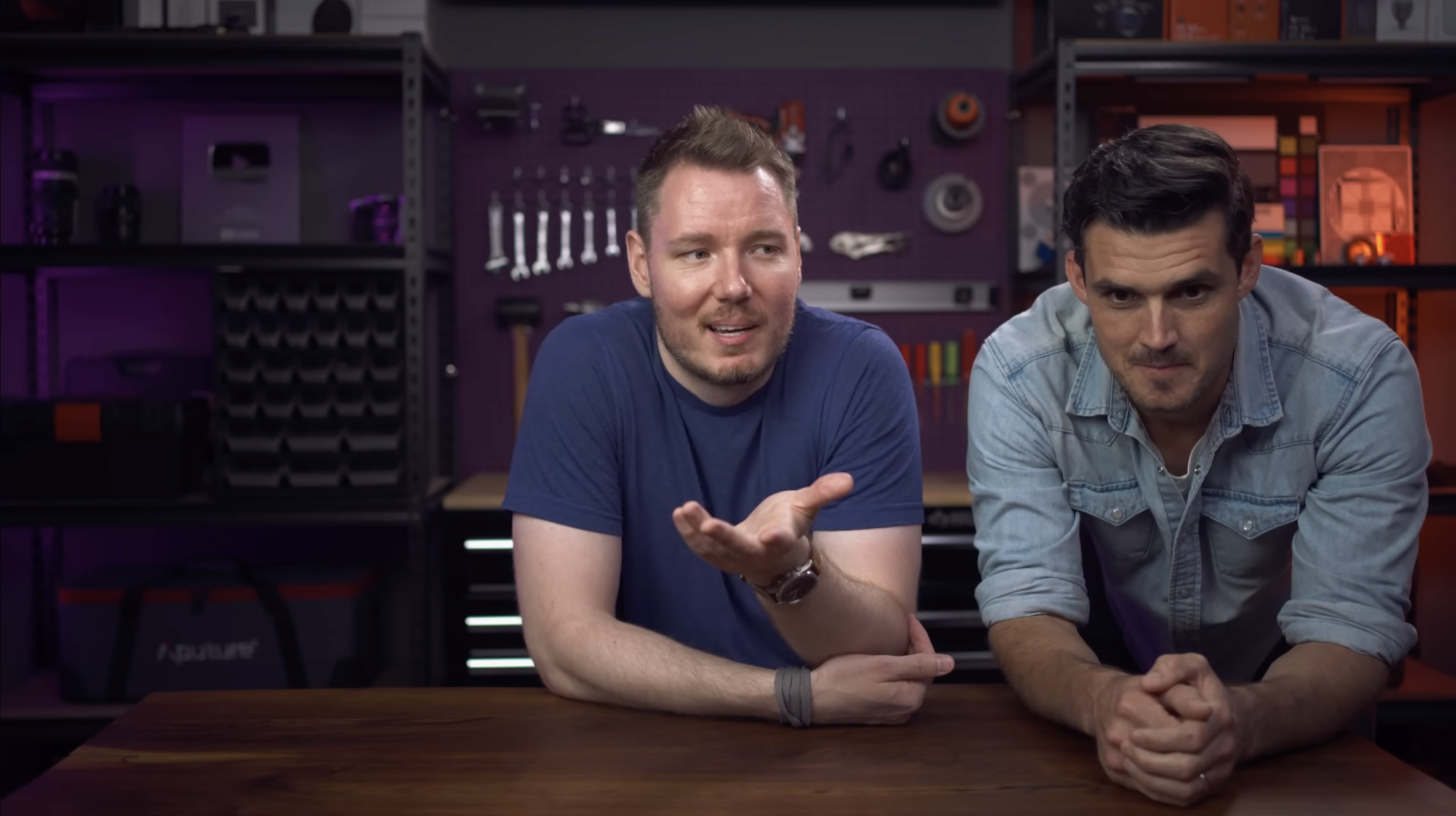
Before we built the Welcome to the Lab studio at Microchip Technology, I watched a collaboration video between Make Art Now and Gerald Undone.
Both are YouTube creators who work at the intersection of technology, craft, and visual storytelling. The video moved between their studios, showing the spaces where they work and the environments they have built around the act of making things. I wasn't watching as a viewer but as a producer, trying to understand why certain content environments make you trust the person speaking before they have said a single word worth trusting.
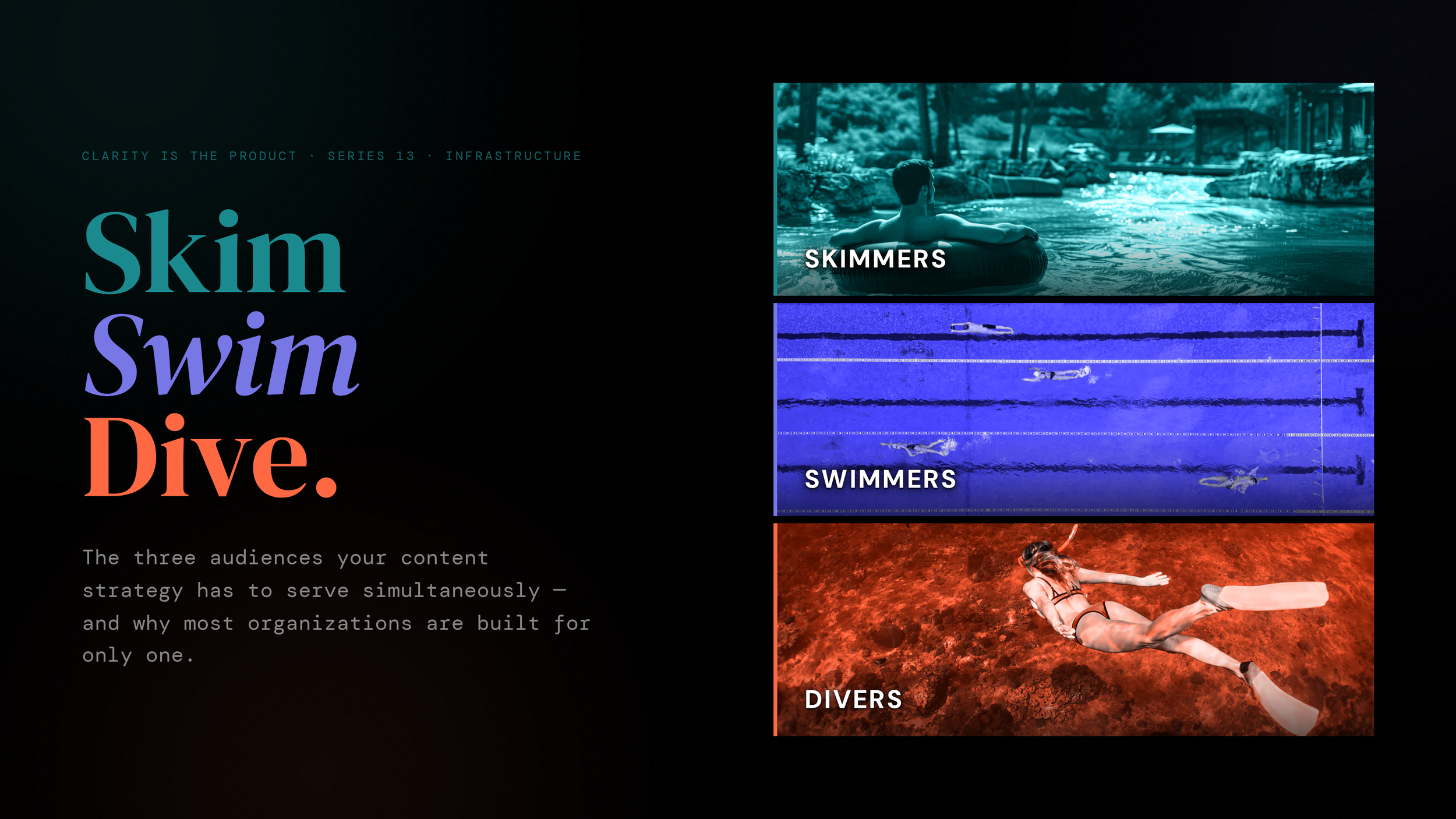
Skimmers. Swimmers. Divers. The Three Audiences Your Content Strategy Has to Serve Simultaneously
The first thing I did when I arrived at Microchip Technology was sit down with the YouTube analytics for two channels, a main marketing channel and a developer-help channel, and try to understand what we had actually built.
I wanted to know what types of videos we made, why we made them, which ones worked, and whether any clear pattern explained the difference. What I found had nothing to do with quality, talent, or budget.
What the Tech Industry and Higher Education Have Both Been Building Toward, And Why the Answer Is the Same
There is a software development tutorial somewhere on YouTube, made by an engineer on the Bangalore team, that I cannot get out of my head.
The engineer knew the material cold. The content was exactly what a developer needed at a specific moment in a product integration. The problem was the audio. The room was wrong, the microphone was wrong, and at several critical moments in the tutorial, the moments where the viewer most needed to follow along, what was being said was simply too hard to parse. Not because the engineer's English wasn't functional. Because the cognitive load of decoding the audio left nothing for the brain to do with the information it was trying to receive. (Cognitive Load Theory, John Sweller, 1988 — established that extraneous cognitive load imposed by poor presentation degrades learning outcomes regardless of content quality.)