
Your Content Isn't Weak. It's in the Wrong Room.
Why "post it everywhere" quietly fails, and how to match Skimmers, Swimmers, and Divers to the platform surfaces that actually reward them.
The most common distribution advice in content marketing is also the most quietly destructive: post it everywhere. Take the one video you made, cut it into a Short, a Reel, a carousel, and a text post, and push it to every platform you have. Maximize the surface area. Be where your audience is.
The instinct is right, but the execution guarantees underperformance, because "everywhere" is not one place. Each platform rewards a different mode of attention, so a single asset pushed to all of them lands on most of them built for the wrong one.
You are not really distributing one piece of content to five audiences, you are sending content designed for one mode of attention into five environments that each reward a different mode. Four of them reject it, and you conclude the content was weak, when it was simply in the wrong room.
A quick recap of the three modes
This series has spent several posts on the three modes of attention. Here they are in one line each, because the platform question only makes sense through this lens.
Skimmers decide in a fraction of a second, before a word is spoken, on the visual signature alone. Swimmers stop but don't commit, giving you fifteen to forty-five seconds to prove the content is worth more of their time. Divers have already decided to invest, and they came to understand something they couldn't understand before.
The mistake is treating platforms as neutral pipes that carry any of these equally, which they don't.
Platforms are not pipes. They have a bias.
A platform is a machine with a preference. Its feed, its algorithm, its watch environment, and the posture of the person holding the device all conspire to reward one mode of attention and quietly punish the others. The feed you scan standing in a grocery line rewards a different thing than the video you open at night with headphones on. Match the mode to the machine, or the machine works against you.
Here is where each mode is actually at home.
Skimmers live where the eye judges before it reads
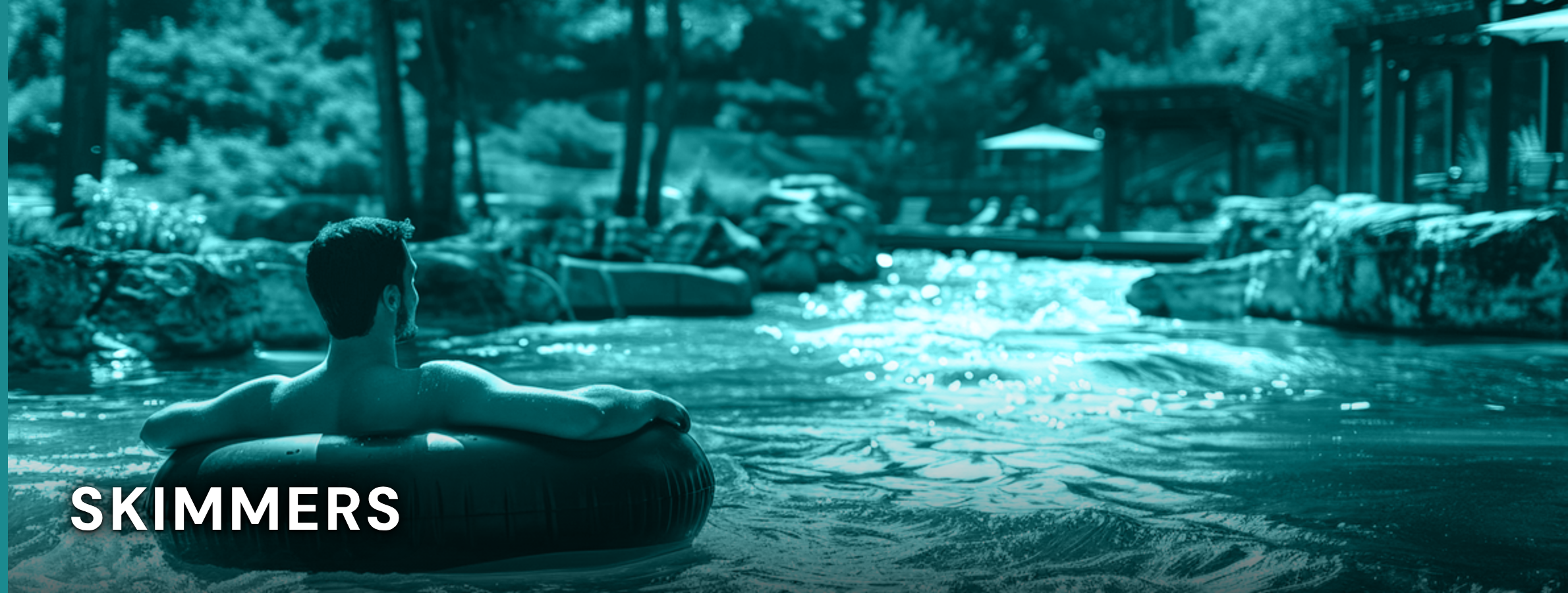
Skimmer surfaces are the ones a person scans at speed, deciding in an instant whether to stop. The Instagram feed and grid are the clearest example. A single strong image, consistent with everything around it, does the whole job. Even with Reels in the mix, the grid is still where a profile tends to get judged as a whole before any single post is opened.
The other Skimmer surfaces hide in plain sight inside other platforms. A YouTube thumbnail is a Skimmer surface. A LinkedIn carousel cover is a Skimmer surface. The first frame of a Reel is a Skimmer surface. In every case the job is identical: signal value visually before the viewer has consciously decided to evaluate it. The content behind it barely matters until the visual has earned the stop.
The trap with Skimmer content is judging it by depth when it was never supposed to be deep. The eye decides fast: a Twitter and IPG Media Lab study found that about half of viewers could recall a video ad after seeing it for just one second. That speed is the point and also the limit, since Skimmer surfaces start the journey without finishing it, and asking them to finish it is how "we went viral and nothing happened" becomes a quarterly ritual.
Swimmers live in short-form discovery
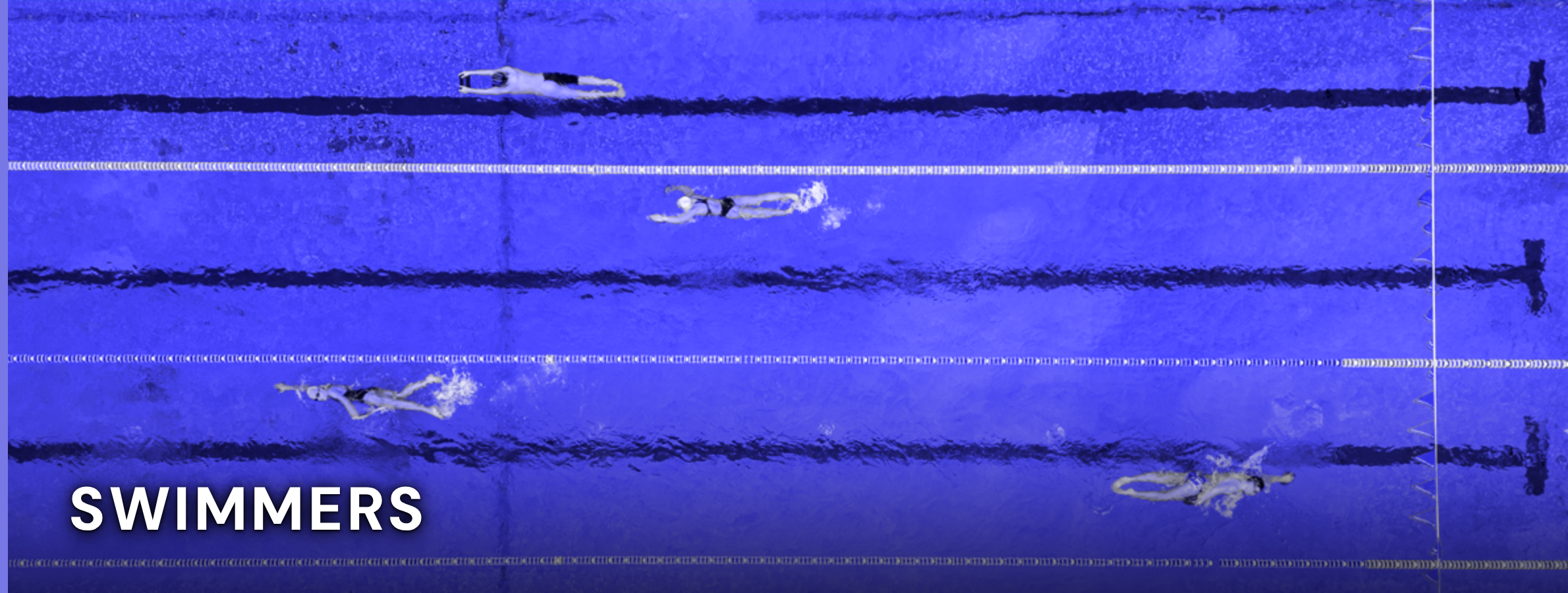
Swimmer surfaces are built for discovery. The viewer did not follow you, did not seek you out, and is deciding in real time whether you are worth another thirty seconds. This is the native territory of short-form video. A 2026 FanPage Karma analysis of more than six million profiles found that non-followers make up 47% of Instagram Reels reach, compared with 35% for image posts, which is the entire point. Reels are a discovery engine, not a loyalty engine, and YouTube Shorts occupy the same attention mode because they are short enough to finish and built to be swiped.
TikTok is the archetype of this mode, and if it is part of your mix it belongs here without question. But you do not need TikTok to serve Swimmers. Reels and Shorts occupy the same attention mode and reach the same discovery-minded viewer.
What wins with Swimmers is less production value than authentic human presence: a real person who obviously knows the subject, sharing something real, delivered fast enough to finish.
Divers live in long-form and live
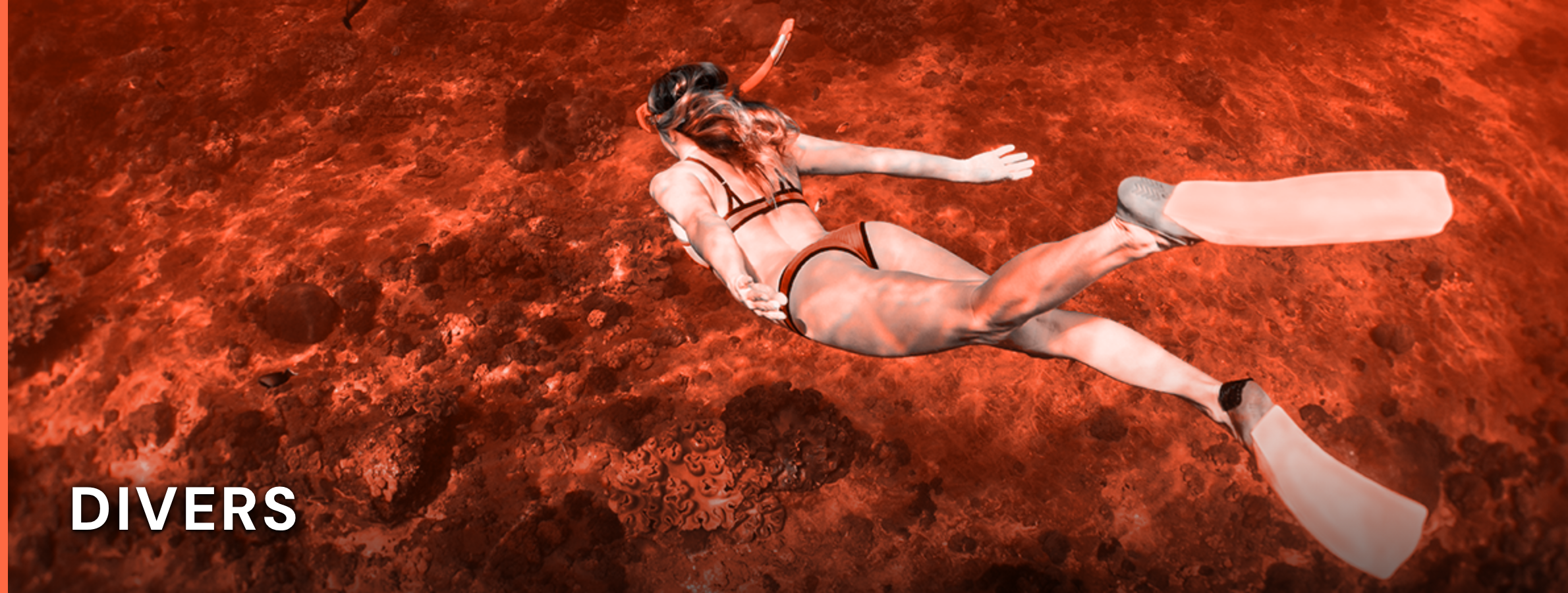
Divers have already committed. They are not being won so much as rewarded for a decision they already made. This is long-form YouTube, the podcast, the full lecture, the deep explainer. The retention math looks worse here on paper, and that is fine, because the people who stay are worth more than a hundred who bounced off a Short. The long-form surface exists for the viewer who chose to go deep, and it is the only surface that can actually satisfy them.
Live is the extreme case of Diver content. Dr. Alok Kanojia, a Harvard-trained psychiatrist known as Dr. K, built HealthyGamerGG on unscripted live conversation and has logged more than 848 million views, with over 3.3 million YouTube subscribers and 684,000 Twitch followers. Those are Diver numbers, an audience that chose hours of real-time conversation over anything faster. Live rewards an environment that can hold an audience not for fifteen minutes but for hours, which is the deepest commitment a platform can ask a viewer to make, and Series 16 covers why that works and who is using it to teach.
The real mistake: mapping the logo, not the surface
Here is the correction that makes all of this usable. A platform is not one thing. Treating "YouTube" or "Instagram" as a single destination is the actual source of the confusion.
YouTube is at least three surfaces. The thumbnail is a Skimmer surface. A Short is a Swimmer surface. A long-form video is a Diver surface. One platform, three modes, and content built for one of them will fail on the other two. Instagram is the same story. The grid serves Skimmers, Reels serve Swimmers, and the carousel serves something closer to a Diver, because the swipe is a small act of commitment.
LinkedIn is the clearest proof that a single surface can span modes on purpose. A document carousel opens with a cover that has to work as a Skimmer hook, then rewards the swipe with progressively deeper content, and every swipe adds dwell time. An AuthoredUp analysis of more than three million LinkedIn posts found that document posts reached about 39% more people and drew about 30% more engagement than the average post. That isn't because documents are magic, it's because the format is built to carry a reader from a Skimmer stop to a Diver payload inside one asset.
Map the surface, not the logo. The question is never "should this go on YouTube." It is "which YouTube surface is this built for, and is that the mode I need right now."
Repurposing is not distribution
This is where "post it everywhere" falls apart. Taking one long-form video, slicing a sixty-second clip out of the middle, and posting that clip as a Reel, a Short, and a LinkedIn video is not distribution, it is a Diver asset amputated and dropped onto Swimmer surfaces, where it reads as a fragment of something rather than a complete thing built to be finished.
The alternative isn't more work for its own sake, it's re-authoring one insight into the native shape of each mode, so the insight stays constant while the expression changes to fit the surface. A single idea becomes a Skimmer image that signals it visually, a Swimmer short that opens a curiosity gap and closes it fast, and a Diver long-form piece that earns the depth. Same idea, three native forms, each built for the mode of the surface it lands on.
A simple test before you post anything: name the mode this piece is built for, then name the surface you are putting it on. If they don't match, you aren't distributing, you're donating content to an algorithm designed to reject it.
The whole system, in one sentence
Every post in this series has circled the same idea from a different angle. The three modes define who is watching and how. The exemplars show who serves each mode well. The production environment is what signals credibility before a word is spoken. Live is that signal held to its longest extreme, and the educators in Series 16 show it works for teaching too. And distribution, the piece most teams treat as an afterthought, is simply the discipline of putting each mode in the room built to reward it.
Content fails less often because it is weak than because it is homeless. Give each mode its room.
Clarity Is the Product is a series by Lumen8 Media on how organizations translate complex ideas into scalable understanding. This post closes the Infrastructure arc: the three audience modes, the creators who prove them, the environment that signals credibility, the live extreme, and the distribution discipline that puts each mode in its place. Read the full series at lumen8.media.
Sources
Platform data:
FanPage Karma, "TikTok vs. Instagram Reach: Who Really Sees Your Content Beyond Your Followers?" (April 2026, 6M+ profiles)
AuthoredUp, analysis of 3M+ LinkedIn personal-profile posts, March 2025 to February 2026
Twitter and IPG Media Lab, video ad recall study, as reported by Adweek
Dr. K and HealthyGamerGG:
